How to Choose the Right Chemical Process Equipment

Introduction
Choosing the right chemical process equipment is essential for achieving efficient, safe, and reliable industrial operations. Equipment selection affects production capacity, product quality, energy consumption, maintenance costs, and the overall performance of a manufacturing plant.
Chemical and process industries use different types of equipment, including storage tanks, pressure vessels, reactors, heat exchangers, process columns, filtration systems, drying systems, evaporators, mixing vessels, and scrubbing systems. Each equipment type performs a specific function and must be selected according to the process requirements.
Selecting equipment based only on its purchase price can create long-term challenges. Incorrect material selection may cause corrosion, insufficient capacity may limit production, and inefficient heat transfer may increase energy consumption.
A systematic approach helps manufacturers identify equipment that meets their operational needs while supporting safety, durability, and long-term value.
1. Understand Your Process Requirements
The first step is to understand the purpose of the equipment and the process it must support.
Determine whether the application involves storage, mixing, chemical reaction, heating, cooling, filtration, drying, evaporation, or gas treatment. Each operation has different technical requirements.
For example, a mixing vessel must provide suitable mixing performance, while a heat exchanger must transfer the required thermal energy. A filtration system must separate solids from liquids according to the required process conditions.
Before selecting equipment, identify:
- The purpose of the equipment.
- Required production capacity.
- Batch size or continuous flow rate.
- Operating temperature and pressure.
- Properties of the process material.
- Desired product quality.
- Available utilities and installation space.
- Cleaning and maintenance requirements.
Providing accurate information at the beginning helps the manufacturer recommend an appropriate technical solution.
2. Evaluate the Properties of Process Materials
The chemicals and materials handled by equipment have a significant influence on its design and construction.
Important properties include chemical composition, concentration, viscosity, density, pH, solids content, corrosiveness, flammability, and sensitivity to temperature.
A highly viscous liquid may require a different mixing arrangement from a low-viscosity liquid. A slurry containing abrasive particles may require additional consideration for wear resistance. Heat-sensitive materials may require carefully controlled temperatures and processing times.
Material properties can also change during processing. Heating, cooling, concentration, or chemical reactions may affect viscosity, phase behaviour, and the tendency to form deposits.
Accurate process data allows engineers to assess material compatibility, equipment configuration, and operating requirements.
3. Select the Appropriate Material of Construction
Material selection influences equipment durability, corrosion resistance, product quality, and maintenance requirements.
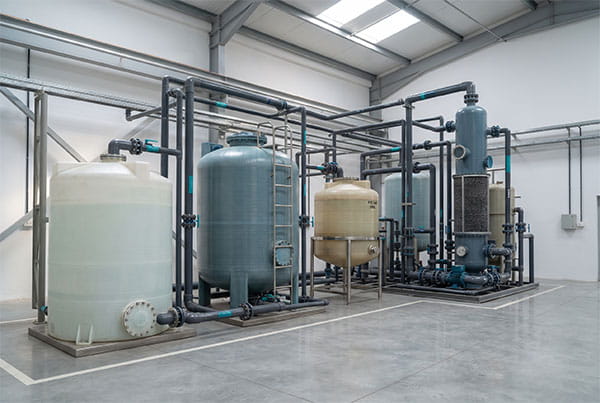
Common material options include stainless steel and other suitable metals, polypropylene (PP), high-density polyethylene (HDPE), and fibre-reinforced plastic (FRP).
Each material has specific advantages and limitations.
Metallic equipment may be suitable for applications requiring particular mechanical strength or pressure-containing capabilities. PP and HDPE may be appropriate for selected chemical storage and handling applications. FRP can be considered for certain corrosive environments when the resin system and structural design are suitable.
However, no material is compatible with every chemical or operating condition. Compatibility depends on the chemical concentration, temperature, exposure duration, mechanical loading, and cleaning procedures.
The assessment should include all parts that contact the process material, such as valves, gaskets, seals, and internal components.
4. Determine the Required Equipment Capacity
Correct capacity selection helps maintain production efficiency and prevents unnecessary expenditure.
For tanks and vessels, consider working volume, headspace, filling and emptying requirements, mixing needs, and material expansion. For continuous processes, evaluate flow rate, residence time, and expected variations in operating conditions.
Batch operations require consideration of the complete production cycle, including charging, processing, heating, cooling, discharge, and cleaning.
Undersized equipment can restrict production and create bottlenecks. Oversized equipment may increase capital costs, energy consumption, and operating complexity.
If future expansion is expected, discuss the planned production capacity with the equipment manufacturer before finalising the design.
5. Consider Temperature and Pressure Conditions
Temperature and pressure are important factors in selecting chemical process equipment.
Heating and cooling requirements affect reactors, mixing vessels, and heat exchangers. The equipment must support the required thermal performance without compromising material compatibility or product quality.
When evaluating a heat exchanger, consider heat duty, inlet and outlet temperatures, flow rates, available utilities, and the tendency of the process material to cause fouling or scaling.
For pressure vessels, distinguish between normal operating pressure and design pressure. Vacuum conditions also require specific engineering consideration because equipment designed for atmospheric service may not be suitable for vacuum operation.
Qualified engineers should establish the appropriate design conditions, protective systems, and applicable standards for the intended application.
6. Choose Equipment According to Its Application
Different equipment types serve different process requirements.
Storage Tanks and Pressure Vessels
Storage tanks hold raw materials, intermediates, or finished products. Pressure vessels are designed for specified pressure-containing duties. Their selection depends on capacity, material, operating conditions, and applicable design requirements.
Reactors and Mixing Vessels
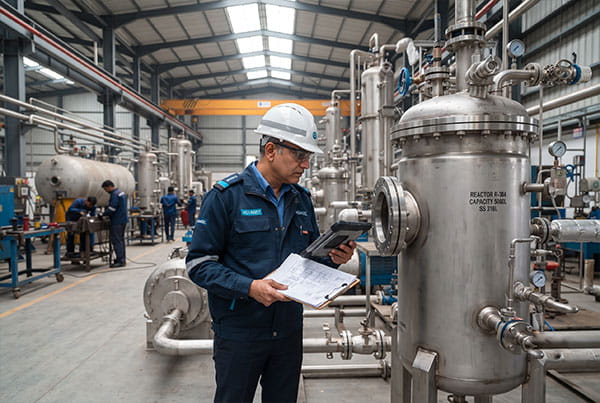
Reactors provide controlled environments for chemical reactions, while mixing vessels support blending, suspension, and other mixing operations. Agitation, temperature control, heat transfer, and instrumentation may be important design considerations.
Heat Exchangers
Heat exchangers transfer thermal energy between process and utility streams. Their selection depends on heat duty, fluid properties, pressure drop, fouling tendency, and temperature requirements.
Process Columns
Process columns may be used for distillation, absorption, and other separation operations. Their design depends on the process objectives, flow rates, and required separation performance.
Filtration Systems and Nutsch Filters
Filtration equipment separates solids from liquids. Selection depends on particle size, solids concentration, filtrate quality, cake properties, and cleaning requirements.
Drying Systems and ATFD
Drying systems remove moisture or solvents from suitable materials. An agitated thin film dryer (ATFD) may be considered for specific duties involving viscous or heat-sensitive materials, depending on the process.
Multi-Effect Evaporators
Multi-effect evaporators concentrate suitable liquid streams through evaporation. Feed characteristics, scaling potential, required concentration, and utility availability influence selection.
Scrubbing Systems
Scrubbing systems treat gas streams to remove selected contaminants. The design depends on gas composition, flow rate, contaminant characteristics, and environmental requirements.
The correct choice should be based on actual process conditions rather than equipment names alone.
7. Prioritise Safety and Compliance
Industrial equipment must be suitable for its intended operating environment and comply with applicable requirements.
Depending on the application, safety considerations may include pressure protection, chemical containment, ventilation, machine guarding, emergency isolation, electrical safety, inspection, and testing.
The equipment specification should identify the required design standards, inspection procedures, documentation, and testing scope.
Requirements vary according to the equipment type, process, industry, and jurisdiction. Qualified professionals should determine the necessary safeguards.
8. Evaluate Maintenance and Cleaning Requirements
Equipment should be designed for practical inspection, cleaning, and maintenance.
Consider access to internal surfaces, filters, seals, nozzles, heat-transfer surfaces, and other components that require periodic attention. Evaluate drainage arrangements, removable parts, and the availability of replacement components.
Cleaning is particularly important when equipment handles multiple products or materials that may leave deposits.
Difficult maintenance access can increase downtime and operating costs. Discuss maintenance intervals, recommended procedures, spare parts, and technical documentation with the manufacturer before purchasing.
9. Compare Total Lifecycle Costs
The purchase price does not represent the complete cost of owning industrial equipment.
A lifecycle assessment should include:
- Initial equipment cost.
- Transportation and installation.
- Energy and utility consumption.
- Cleaning and consumables.
- Inspection and maintenance.
- Spare parts and repairs.
- Potential production losses during downtime.
- Expected service life.
A lower-priced option may become more expensive over time if it requires frequent repairs or consumes more energy.
Compare quotations using equivalent technical specifications, materials, accessories, testing requirements, and documentation. Differences in the scope of supply should be clarified before making a decision.
10. Choose a Technically Capable Manufacturer
The equipment manufacturer should understand the intended process and prepare a proposal based on the available technical information.
Review manufacturing capabilities, engineering experience, quality procedures, fabrication methods, inspection arrangements, and documentation practices.
Clarify the design basis, operating limits, construction materials, delivery schedule, installation scope, and commissioning responsibilities.
A detailed technical proposal makes supplier comparisons easier and helps reduce uncertainty during project execution.
11. Plan Installation and Commissioning
Equipment selection should include installation planning from the beginning.
Check the available space, foundation requirements, lifting access, delivery route, piping connections, electrical supply, utility connections, and maintenance clearances.
For existing plants, confirm site dimensions and interfaces with upstream and downstream equipment.
Commissioning plans should address inspections, instrument checks, functional testing, safety checks, operator training, and agreed performance criteria.
Proper planning helps minimise delays and supports a smoother start-up.
Common Equipment Selection Mistakes
Avoid selecting equipment based only on the lowest quotation, providing incomplete process information, overlooking chemical compatibility, or ignoring cleaning requirements.
Other common mistakes include choosing capacity without considering the full production cycle, failing to assess connected equipment, and leaving important design decisions until fabrication has started.
A structured technical review helps identify these issues before purchase.
Conclusion
Choosing the right chemical process equipment requires careful consideration of process requirements, material compatibility, capacity, operating conditions, safety, maintenance, and lifecycle cost.
By collecting accurate process data and evaluating equipment against clearly defined technical criteria, manufacturers can make better purchasing decisions and improve plant reliability.
Suyara Industries Pvt. Ltd. offers industrial and chemical process equipment categories including pressure tanks, heat exchangers, process columns, filtration systems, drying systems, ATFDs, multi-effect evaporators, PP/HDPE/FRP tanks, mixing vessels, Nutsch filters, and scrubbing systems.
For equipment enquiries, provide your process details, required capacity, material properties, and operating conditions so suitable options can be evaluated.