Why Corrosion-Resistant Equipment Matters in Process Industries

Introduction
Corrosion is a major concern in industrial environments where equipment comes into contact with chemicals, moisture, vapours, elevated temperatures, or aggressive cleaning agents. It can damage surfaces, reduce material thickness, contaminate products, cause leakage, and lead to unplanned shutdowns.
In chemical and process industries, unsuitable material selection can affect more than equipment durability. Corrosion-related failures may influence worker safety, product quality, production schedules, environmental protection, and maintenance costs.
Corrosion resistance depends on several factors, including chemical composition, concentration, temperature, operating conditions, construction materials, and equipment design. Selecting the right material and maintaining equipment properly are essential for long-term reliability.
This article explains why corrosion-resistant equipment matters and what manufacturers should consider when selecting industrial tanks, vessels, heat exchangers, pipelines, and other process equipment.
1. Understanding Corrosion in Process Industries
Corrosion is the deterioration of a material due to interaction with its environment.
In metallic equipment, corrosion can appear as uniform surface thinning, pitting, crevice corrosion, galvanic corrosion, or other forms of localised damage.
Non-metallic materials can also degrade. Certain polymers may swell, become brittle, or lose mechanical performance when exposed to unsuitable chemicals or temperatures. FRP equipment can be affected by damage to the resin system, surface deterioration, or other service-related mechanisms.
Corrosion may not always be visible from the outside. Localised damage can create serious defects in a small area, while uniform corrosion can gradually reduce wall thickness across a larger surface.
Understanding the damage mechanism helps engineers select suitable materials and determine appropriate maintenance measures.
2. Why Corrosion Resistance Matters
Equipment Integrity
Corrosion can weaken tanks, vessels, pipelines, and heat exchangers. Severe deterioration may compromise their ability to contain process materials safely.
Product Quality
Corrosion products or degraded surfaces may contaminate process materials. This can affect product specifications, consistency, and cleaning effectiveness.
Plant Reliability
Corrosion-related repairs and replacements may interrupt production. Repeated failures can increase maintenance workloads and make production planning difficult.
Worker and Environmental Safety
Leaks involving hazardous chemicals can expose workers or release substances into the environment. The consequences depend on the chemical, quantity, equipment location, and operating conditions.
Long-Term Cost Control
The cost of corrosion includes inspection, maintenance, repairs, replacement, downtime, waste handling, and potential production losses.
Selecting suitable materials during the design stage can reduce avoidable risks and support more reliable operations.
3. Identify the Chemical Environment
Material selection should begin with an accurate understanding of the substances that contact the equipment.
Important information includes:
- Chemical composition and concentration.
- Operating temperature.
- pH and water content where relevant.
- Impurities and contaminants.
- Cleaning and sanitising chemicals.
- Process vapours and condensates.
- Conditions during start-up and shutdown.
The same chemical may behave differently at different concentrations or temperatures. Cleaning agents can also be more aggressive than the normal process material.
Plants that handle multiple products should evaluate each service individually rather than assuming that one material will be suitable for every application.
Where the process composition is uncertain, reliable technical data and advice from a qualified materials specialist can help guide selection.
4. Consider Temperature and Operating Conditions
Temperature can significantly affect the compatibility of materials with chemicals.
A material that performs well at ambient temperature may not be suitable at a higher operating temperature. Temperature changes may also affect mechanical strength, chemical reaction rates, and the performance of seals and joints.
Repeated heating and cooling can introduce thermal stresses. Pressure variations, vibration, and mechanical loading may create additional design considerations.
Equipment selection should therefore account for normal operating conditions as well as appropriate design conditions. Cleaning cycles, shutdowns, and other credible operating scenarios should also be evaluated.
5. Select the Right Material of Construction
Different material families offer different properties and limitations.
Metallic Equipment
Stainless steel and other suitable metals are used in many industrial applications because of their mechanical properties and fabrication characteristics. However, corrosion resistance depends on the specific material grade and operating environment.
The term “stainless steel” alone is not sufficient to establish chemical compatibility.
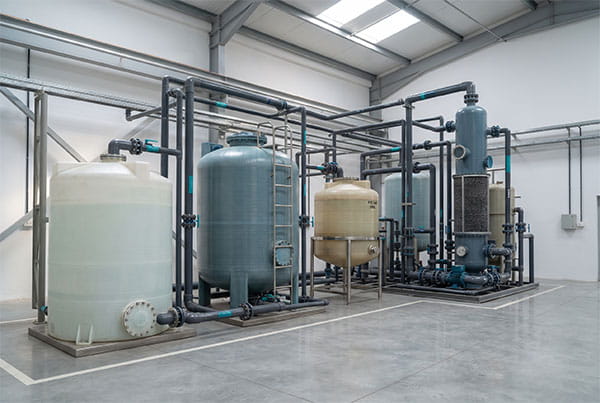
Polypropylene (PP)
PP can be suitable for selected chemical storage and handling applications. Its suitability depends on the chemical, temperature, mechanical loading, and design of the finished equipment.
High-Density Polyethylene (HDPE)
HDPE is used in various industrial tank and chemical-handling applications. Selection requires consideration of chemical compatibility, temperature, structural requirements, and long-term loading.
Fibre-Reinforced Plastic (FRP)
FRP combines reinforcing fibres with a resin matrix. Its chemical resistance and structural performance depend on the resin system, laminate design, manufacturing quality, and service conditions.
No material is universally suitable for every chemical or process. The complete application must be assessed before a final decision is made.
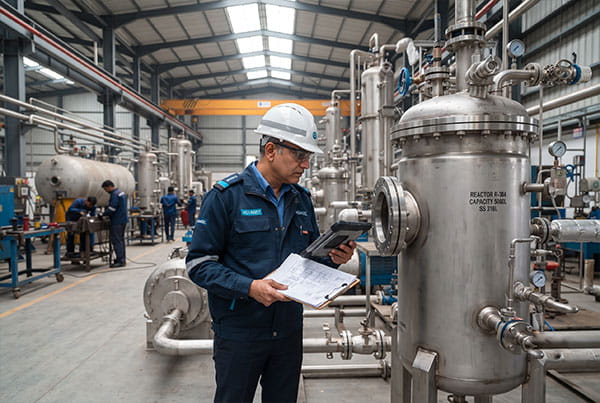
6. Corrosion-Resistant Tanks and Vessels
Storage tanks and process vessels can experience different conditions at the bottom, liquid surface, vapour space, nozzles, and drains.
Deposits may accumulate at the bottom of a vessel, while condensation can affect surfaces above the liquid level. Stagnant areas and residues may create conditions that differ from those in the main process stream.
When selecting a tank or vessel, consider the stored chemical, concentration, temperature, capacity, pressure conditions, cleaning requirements, and installation environment.
Valves, seals, gaskets, nozzles, and internal fittings should also be compatible with the service.
Chemical compatibility alone does not establish structural suitability. Equipment must meet the applicable mechanical and design requirements for its intended operating conditions.
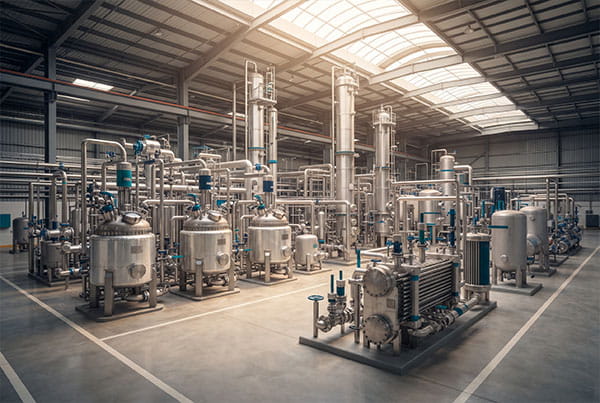
7. Corrosion in Heat Exchangers
Heat exchangers operate with process and utility streams that may have different temperatures, pressures, and chemical compositions.
Corrosion can damage heat-transfer surfaces, reduce equipment integrity, and potentially allow cross-contamination between streams.
Fouling and deposits can create additional challenges because the chemical conditions beneath deposits may differ from those of the surrounding fluid.
Material selection should consider both sides of the heat exchanger, including their chemical composition, temperature, flow rate, suspended solids, and cleaning agents.
Gaskets, seals, and other components must also be compatible with the process.
Monitoring heat-transfer performance, pressure drop, and evidence of leakage can help identify problems that require further investigation.
8. Protect Pipelines, Ducts, and Fittings
Pipelines and ducts may experience corrosion at bends, joints, welds, low points, drains, and locations where liquids or deposits accumulate.
Changes in flow velocity and suspended solids can also contribute to erosion or erosion-corrosion. Outdoor installations may face additional environmental exposure.
Material selection should be consistent across the system, with attention to valves, fittings, gaskets, supports, expansion joints, and instrument connections.
Drainage, inspection access, and the ability to isolate sections are important design considerations.
Repairs and modifications should follow approved engineering procedures and use materials suitable for the intended service.
9. Maintain Product Quality and Cleanability
In many industrial applications, equipment must maintain product purity as well as safe containment.
Corrosion products may introduce unwanted particles or dissolved substances into the process. Degraded coatings, linings, or polymer surfaces may also affect product quality.
Quality-sensitive applications may require specific surface finishes, cleanability, material traceability, and cleaning procedures.
The material specification should cover every component that contacts the product. Cleaning chemicals and repeated cleaning cycles must be considered because a material compatible with the normal process may still be affected by cleaning agents.
10. Establish an Inspection and Maintenance Programme
Even appropriately selected equipment requires inspection and maintenance.
A suitable programme may include visual inspections, thickness measurements where applicable, checks for leakage, monitoring of operating conditions, and examination of critical joints or components.
Inspection frequency should depend on equipment criticality, service conditions, applicable requirements, and operating history.
When damage is detected, competent personnel should determine its cause and assess its significance. Repairs, replacements, and changes to operating conditions must follow appropriate engineering procedures.
Routine maintenance also provides an opportunity to review whether the original material selection remains suitable as process conditions change.
11. Design Practices That Help Manage Corrosion
Corrosion management involves more than selecting a suitable material.
Equipment design should consider drainage, accessibility, joint details, inspection access, and the avoidance of areas where liquids or deposits may collect.
Coatings and linings may be appropriate for certain applications, but their suitability depends on chemical compatibility, operating temperature, application quality, and maintenance requirements.
Where dissimilar materials are connected, potential galvanic effects should be evaluated. The complete assembly—including fittings, seals, and connected pipelines—should be reviewed as a system.
12. Consider the Total Cost of Corrosion
The initial purchase price does not reflect the complete cost of equipment ownership.
A lifecycle assessment should consider installation, inspection, repairs, replacement, downtime, cleaning, and potential production losses.
A material that costs more initially may provide better value if it is suitable for the service and reduces the frequency of repairs. However, the most expensive material is not automatically the best choice.
The correct decision balances chemical compatibility, mechanical requirements, fabrication quality, maintainability, and expected service life.
Common Corrosion-Related Mistakes
Industrial plants should avoid selecting materials without checking chemical compatibility, ignoring cleaning agents, overlooking temperature changes, or assuming that every grade within a material family performs identically.
Other mistakes include neglecting inspection, failing to investigate recurring failures, and replacing damaged components without addressing the underlying cause.
A documented materials assessment and maintenance plan help reduce these risks.
Conclusion
Corrosion-resistant equipment plays an important role in maintaining industrial safety, product quality, equipment integrity, and operational reliability.
The right solution begins with understanding the process chemistry, temperature, pressure, and operating environment. Material selection should be supported by technical data and engineering evaluation, while inspection and maintenance help identify deterioration before it develops into a serious problem.
Suyara Industries Pvt. Ltd. offers industrial equipment categories including pressure tanks, heat exchangers, process columns, PP/HDPE/FRP tanks, filtration systems, drying systems, mixing vessels, and other process equipment.
For equipment enquiries, provide the chemical details, operating temperature, concentration, and application requirements to support an appropriate technical evaluation.